

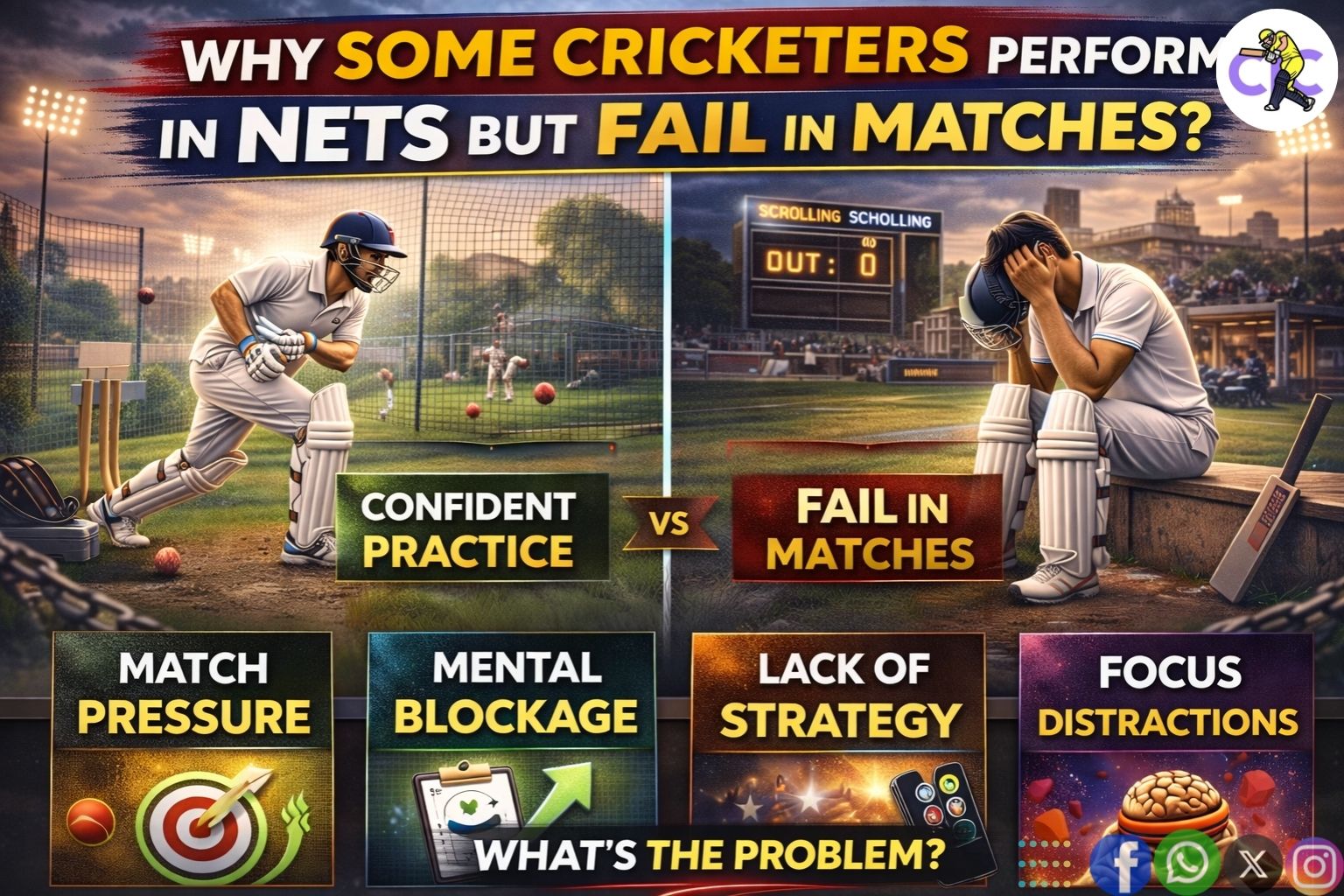
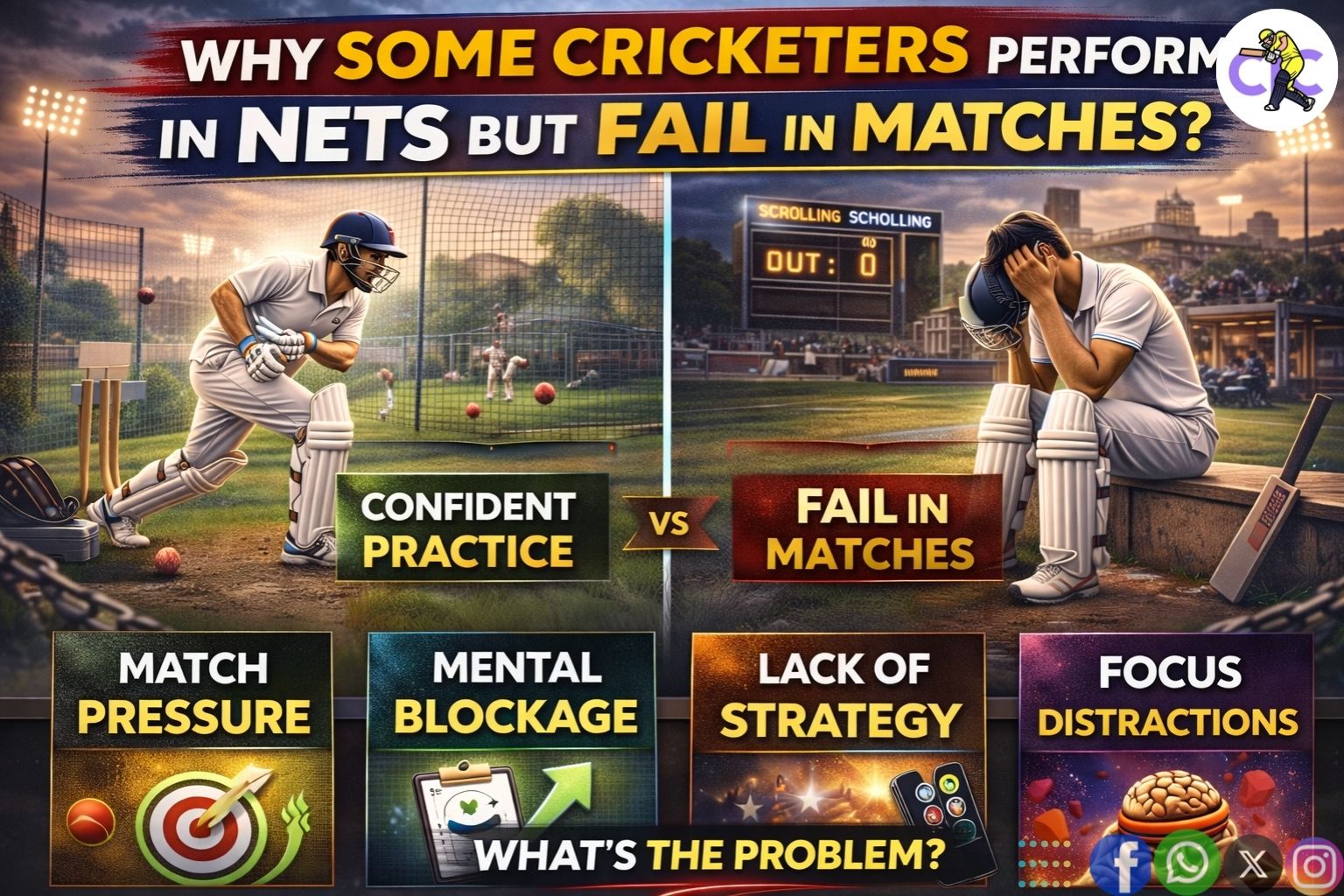
It is a situation many young cricketers face during their early playing days. In net practice, everything seems perfect. Players time the ball well, play confident shots, and feel comfortable against bowlers.
But when the actual match begins, the same players suddenly struggle to perform.
This difference between nets vs match performance in cricket is more common than most players think. Understanding the reasons behind it is the first step toward improving match performance. Also Read: Why Young Cricketers Fail in Matches Despite Good Practice?
Practice Environment vs Match Environment
Net practice usually happens in a controlled environment. Players are familiar with the bowlers, the pitch conditions, and the training routine. Mistakes are acceptable because the goal is learning.
Matches, however, are unpredictable. Players face unfamiliar bowlers, competitive situations, and expectations from coaches, teammates, and sometimes even spectators.
This sudden shift in environment creates pressure that does not exist during practice sessions.
Match Pressure and Decision Making
One of the biggest factors affecting performance is match pressure.
During practice, players focus purely on technique. But during matches, thoughts like “I should not get out early” or “I must perform today” can affect decision-making.
This mental pressure often leads to hesitation, poor shot selection, or defensive body language, which ultimately impacts performance.
Lack of Match Simulation in Training
Another common reason is training that focuses only on technique but not on match situations.
Many young players spend hours practicing shots in nets but rarely simulate real match scenarios such as:
Rotating strike under pressure
Playing defensive cricket during difficult spells
Managing scoreboard situations
Handling aggressive bowlers
Without exposure to these situations during practice, players may struggle to adapt quickly during real matches.
Confidence and Self-Belief
Confidence plays a huge role in cricket performance.
When players face a few failures in matches, they may begin doubting themselves even if their skills are strong. This mental doubt can create a cycle where players perform well in practice but lose confidence during competitive games.
Bridging the Gap Between Nets and Matches
Improving match performance requires more than just increasing practice time. It requires structured guidance, match awareness, and mental preparation.
This is where Career In Cricket (CIC) supports aspiring cricketers.
Through career counselling from experienced international coaches, CIC helps players understand the difference between technical practice and real match readiness.
CIC also guides students toward the right cricket academy, where training includes match simulations, strategic awareness, and performance-based improvement.
Skill-related gaps are identified through elite mentorship so that players can focus on the specific aspects of their game that affect match performance.
Additionally, through CricSocial, young cricketers can share match experiences, learn from others, and stay motivated within a supportive cricket community. Also Read: Club Cricket Se State Cricket Tak Ka Safar – Complete Cricket Career Roadmap
Final Thoughts
Performing well in nets is important because it builds technique and confidence. But real cricket success is measured by performance during matches.
When players combine technical practice with mental strength, match awareness, and the right guidance, the gap between nets and match performance gradually disappears.
With patience, structured training, and the right support system, young cricketers can turn their strong practice sessions into consistent match-winning performances.


